
home » Capacity Calculator » 400kw
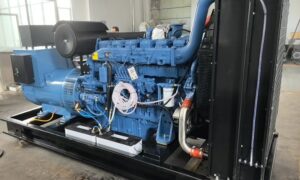
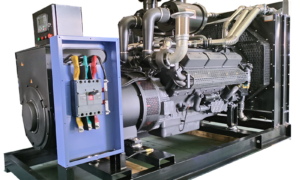
400kW Industrial Diesel Generator Sets: Your Mid-Range Power Solution
Deploying a 400kW heavy-duty power plant requires careful planning around integration, voltage stability, and long-term service. Our expertise lies in delivering not just a generator, but a reliable power system. If you are evaluating options for a data center, plant, or large facility, request a project consultation. We’ll provide the specifications and documentation you need for decision-making.
Comparison Table of Core Parameters of 400kW Diesel Generator Set
| Specification | Cummins | Volvo Penta | Yuchai | Weichai | Shangchai |
|---|---|---|---|---|---|
| Engine Model | QSL8.9-G3 / QSK19-G4 | TAD1641GE | YC6K500L-D30 | WP13G500E342 | SC12G530D2 |
| Estimated Price (USD) | $45,000 - $52,000 | $75,000 - $82,000 | $38,000 - $45,000 | $37,000 - $45,000 | $35,000 - $42,000 |
| Engine Technology | High-pressure common rail, turbocharged & aftercooled. | Electronic unit injection, turbocharged, charge air cooling. | Four-valve, high-pressure common rail, turbo intercooled. | High-pressure common rail, two-stage turbocharged. | High-pressure common rail, turbocharged & intercooled. |
| Fuel Efficiency | 198 - 205 g/kWh | 195 - 203 g/kWh | 200 - 210 g/kWh | 205 - 215 g/kWh | 203 - 212 g/kWh |
| Intelligent Control System | Cummins PowerCommand digital control | Volvo EMCP 4.3 control panel | SmartGen, Deif, or custom controller | SmartGen, ComAp, or custom controller | SmartGen, ComAp, or custom controller |
| After-sales Service | Global parts & service network. Standard warranty, extended plans available. | Strong global support. Warranty & service packages. | Extensive domestic (China) network. Competitive parts pricing. | Strong domestic network. Fast regional parts supply. | Extensive domestic service points. Good parts availability. |
Beyond Basic Specs: Advanced Technical Features & Solutions
| Feature | Problem It Solves | Our Solution | Value to Your Operation |
|---|---|---|---|
| Motor Starting & Load Management | Large motors (e.g., for pumps, compressors) require 4-6x their running current to start. Undersized generators cause voltage dips, failed starts, or shutdowns. | Our 400kW units are engineered with high cyclic capability and smart controllers that manage inrush current. We ensure ample kVA rating and transient response to handle your largest motor. | Reliable Startups: Eliminate nuisance trips. Right-Sizing Confidence: Ensures the 400kW generator you choose can handle your actual mixed load, including the toughest motor. |
| Non-Linear Load Compatibility | Modern equipment (UPS, VFDs, IT servers) creates harmonic distortion. This can overheat standard generators, causing inefficiency and premature failure. | We integrate alternators with low subtransient reactance and offer optional advanced winding designs or standalone harmonic filters to handle high TIF/THD ratings. | Protect Your Asset: Prevents damage from heat build-up. Clean Power: Ensures safe operation for sensitive electronics, which is critical for data centers and automated facilities. |
| Fully Automatic Transfer Switch (ATS) & Fast Power Switching | Power outages require swift, reliable backup power initiation to minimize operational disruption, data loss, or safety risks. | We supply and integrate UL 1008 certified automatic transfer switches with seamless transition. Our systems guarantee break-before-make switching with typical transition times under 10 seconds. | Business Continuity: Automated, hands-off operation ensures critical loads are powered without delay. Safety & Compliance: Meets stringent codes for emergency power systems in healthcare, telecom, and commercial buildings. |
| Comprehensive Control System with Protections | Basic controls leave the generator vulnerable to damage from conditions like low oil pressure, high temperature, overspeed, or overload. | Our standard digital control panel features four essential protections: 1) Low Oil Pressure, 2) High Coolant Temperature, 3) Over-speed, 4) Overload. This is the core safety system for the engine and generator. | Enhanced Reliability & Longevity: Prevents catastrophic engine failures. Reduced Downtime & Cost: Avoids expensive repairs by shutting down the unit before damage occurs. |
| Customizable Configuration Solutions | Standard generators often don't fit unique site requirements for fuel type, mobility, sound levels, or parallel operation. | We provide tailored solutions: from base open skids to fully integrated sound-attenuated canopies, mobile trailer units, dual-fuel capabilities, and synchronizing systems for multiple generators. | Perfect Fit for Your Site: Get exactly what you need, optimized for your space, regulations, and operational plans. Future-Proofing: Design scalability into your power system from the start. |
Why choose 400kw - match according to usage scenarios
| Comparison Factor | 300kW Generator | 💡 400kW Generator (Recommended Middle Ground) | 500kW Generator |
|---|---|---|---|
| Typical Application Scope | Smaller factories, medium retail, water plants, large residential complexes. | Most plants, commercial complexes (malls/hotels), hospitals, mid-size data centers. | Large plants, heavy industry, large data halls, major infrastructure. |
| Key Advantage | Lower initial investment, compact size, suitable for well-defined loads. | Optimal balance of power, future load growth margin (20-25%), and cost. Meets most mid-scale needs without over-specifying. | High power reserve, can handle large motor starts and simultaneous heavy loads. |
| Fuel Efficiency & Load | Best efficiency at 70-80% load. Risk of overload if future load grows. | Runs efficiently at optimal 70-85% load for typical mid-scale demand, protecting engine life. | Efficient only when load is consistently high (>60%). Inefficient at low loads, causing "wet stacking". |
| Physical Footprint & Installation | Easier to install, more flexible for space-constrained sites. | Requires moderate space; planning is standard for industrial sites. | Largest footprint, may require significant space and reinforced foundations. |
| Estimated Total Cost (Acquisition + Operating) | Lowest initial cost, but may become obsolete if load grows. | Best value: higher initial than 300kW, but offers lower cost per kW and avoids premature replacement. | Highest initial and operational cost, justified only for actual high-load needs. |
How to Make Your Final Decision
To choose between these power tiers, answer these three questions:
What is your calculated peak load?
Use a professional load calculation sheet. If your result is 330-380kW, a 400kW unit is the safest and most efficient choice.
What is your future growth plan in the next 5-7 years?
No major expansion: A 300kW might suffice if it meets current needs with a small buffer.
Planned growth (e.g., adding equipment): The 400kW‘s built-in 20-25% margin provides essential future-proofing without the cost of a 500kW unit.
What is the nature of your largest motor/load?
Large motors require high starting current (up to 6x running current). The extra capacity of a 400kW generator is often necessary to handle these starting surges smoothly compared to a 300kW unit, preventing nuisance trips.
Key Takeaway: The 400kW generator is not just a middle option in power, but often the most rational choice in terms of Total Cost of Ownership (TCO). It balances sufficient power for today’s needs, prudent margin for tomorrow’s growth, and operational efficiency, avoiding the pitfalls of under-sizing (300kW) and the unnecessary expense of over-sizing (500kW).
Would you like a template for a basic load calculation sheet to help your customers self-assess their needs?
Total Cost of Ownership (TCO) Analysis for a 400kW Diesel Generator
| Cost Phase | Cost Item | Calculation Basis / Description | Estimated Cost (USD) |
|---|---|---|---|
| 1. Initial Capital Expenditure | Generator Set Purchase & Delivery | Base price for a standard 400kW open skid unit. | $45,000 - $80,000 |
| Installation & Commissioning | Includes basic civil work, cabling, and first startup. | $5,000 - $15,000 | |
| Total Initial Investment | Sum of purchase and installation. | $50,000 - $95,000 | |
| 2. Recurring Operational Costs (Annual) | Fuel Consumption | Most significant variable. At 75% load (300kW), consuming ~210 g/kWh with diesel at $1.1/L. | ~$8,662 / year |
| Engine Oil & Filters | Regular changes per maintenance schedule. | $400 - $800 / year | |
| Coolant, Air Filters, etc. | Periodic replacement of other consumables. | $200 - $500 / year | |
| Total Annual Operational Cost | Dominant cost over the lifecycle. | ~$9,262 - $9,962 / year | |
| 3. Maintenance & Service Costs | Scheduled Preventive Maintenance | Labor for routine service (oil changes, inspections). | $500 - $1,500 / year |
| Unscheduled Repairs / Parts | Contingency for wear parts (injectors, sensors, belts). | $1,000 - $3,000 / year | |
| Major Overhaul (Year 5) | Potential top-end rebuild or significant component replacement. | $4,000 - $8,000 (once) | |
| 4. End-of-Life Value | Residual Value / Resale | Well-maintained unit retains value after 5 years. | -$15,000 to -$25,000 (A Credit) |
| 5. TOTAL 5-YEAR COST OF OWNERSHIP | Sum of all phases (Initial + 5Y Ops & Maint - Residual Value). | $88,310 - $158,810 | |
| Key Insight & Variable Impact | The True Cost Driver: Over 5 years, fuel costs can constitute 50-70% of the total TCO, far exceeding the initial purchase price. A more fuel-efficient model (e.g., 195 vs. 215 g/kWh) can save $5,000+ in this period. Higher quality units often have lower repair costs, balancing a higher initial price. |
Do you need to accurately calculate how much power diesel generator set your load needs to match
【 Click on Diesel Generator Power Selection Calculator 】
Do you want to calculate the fuel efficiency of a 400kw diesel generator more accurately?
Please go to 【the Generator Fuel Calculator page】